Tiger Tattoo Meaning Explained: Symbolism, Styles & Placement Guide
original published date: mar 23, 2026
major update date:
Tiger tattoos have long been admired for their fierce beauty and symbolic depth. Whether inked inTiger tattoos are enduring icons in body art, celebrated for their fierce aesthetic and rich symbolic weight. Whether rendered in vivid color or high-contrast black-and-grey, a tiger tattoo communicates an unmistakable message of courage, sovereignty, and resilience.
Beyond visual impact, the tiger carries deep cross-cultural history. Aligning your personal story with the right visual style, placement, and artistic tradition ensures your tattoo remains a timeless personal statement.
Symbolic Meanings of Tiger Tattoos
Tigers occupy a unique place in the human lexicon of strength. Unlike apex predators that hunt in packs, the tiger is a solitary hunter, making it a universal emblem of self-reliance and raw personal authority.
| Cultural / Conceptual Lens | Primary Symbolism | Common Design Associations |
|---|---|---|
| Traditional Chinese (Hu) | Protection, warding off evil spirits (Bixie), supreme authority | Paired with bamboo, wind clouds, or five-element motifs |
| Japanese Irezumi | Courage, defense against bad luck, autumn, royalty | Paired with dragon (Ryu-Tora), cherry blossoms, or waves |
| Western / Modern | Independence, personal triumph, untamed passion | Geometric frames, hyper-realistic portraits, or dagger elements |
| White Tiger (Byakko) | Rarity, spiritual wisdom, autumn/west cardinal direction | Snow motifs, blue eyes, fine-line or ethereal shading |
For many, getting inked with a tiger marks a pivotal life transition—overcoming adversity, breaking away from toxic environments, or stepping into a role of leadership. The tiger represents an unyielding spirit that refuses to back down from life’s obstacles.
Spiritual Defense and Protection
In East Asian folklore, tigers are guardians. In Chinese mythology, the tiger god (Ts'ai Shen) guards wealth and protects against negative energies. Similarly, Japanese Irezumi frequently positions tigers on large canvases (like full backpieces) to act as a physical shield for the wearer.
As documented by The Metropolitan Museum of Art, tigers have historically been depicted alongside dragons in East Asian art to represent the dynamic equilibrium between physical prowess and spiritual dominion.
Tiger Tattoo Style Guide: Choosing Your Aesthetic
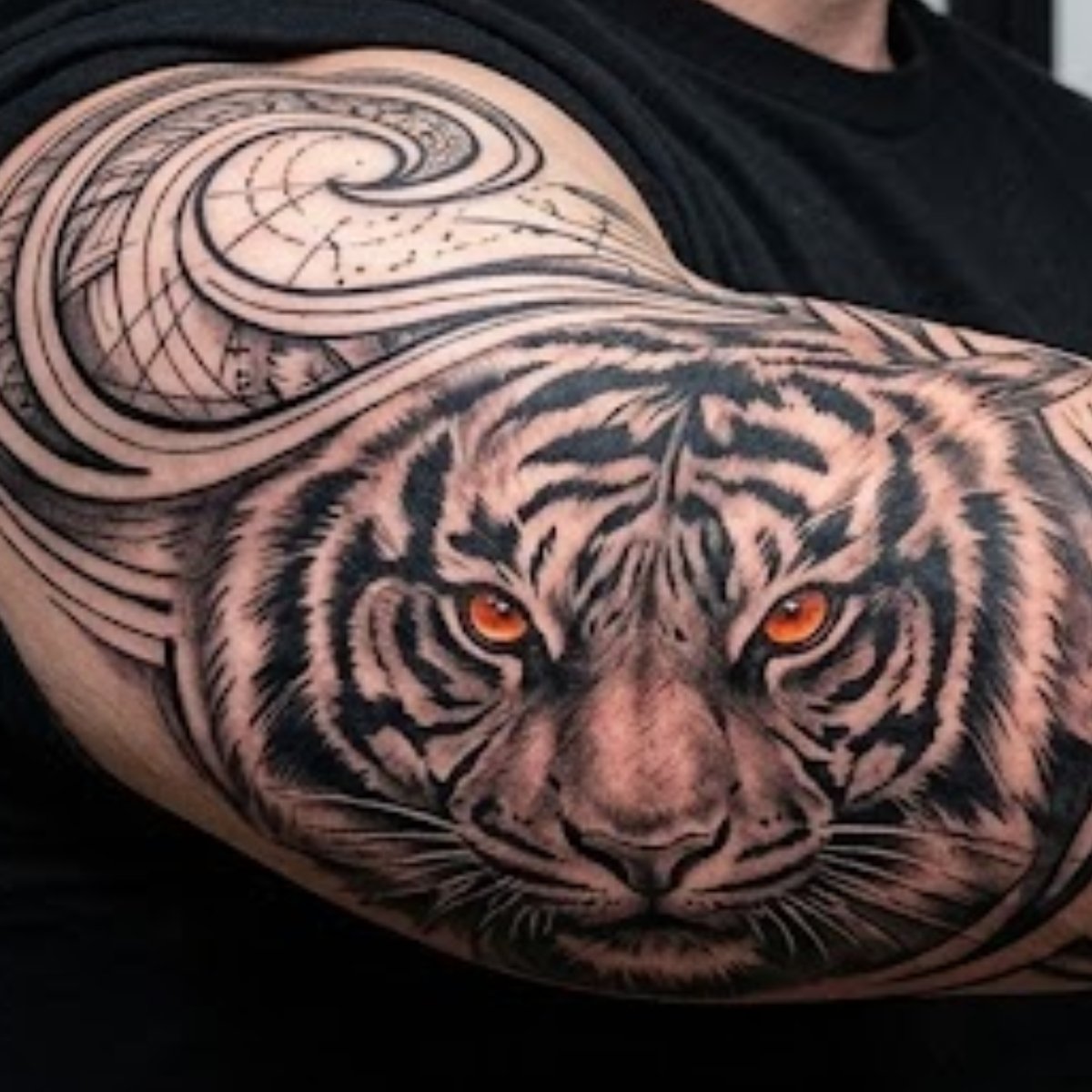
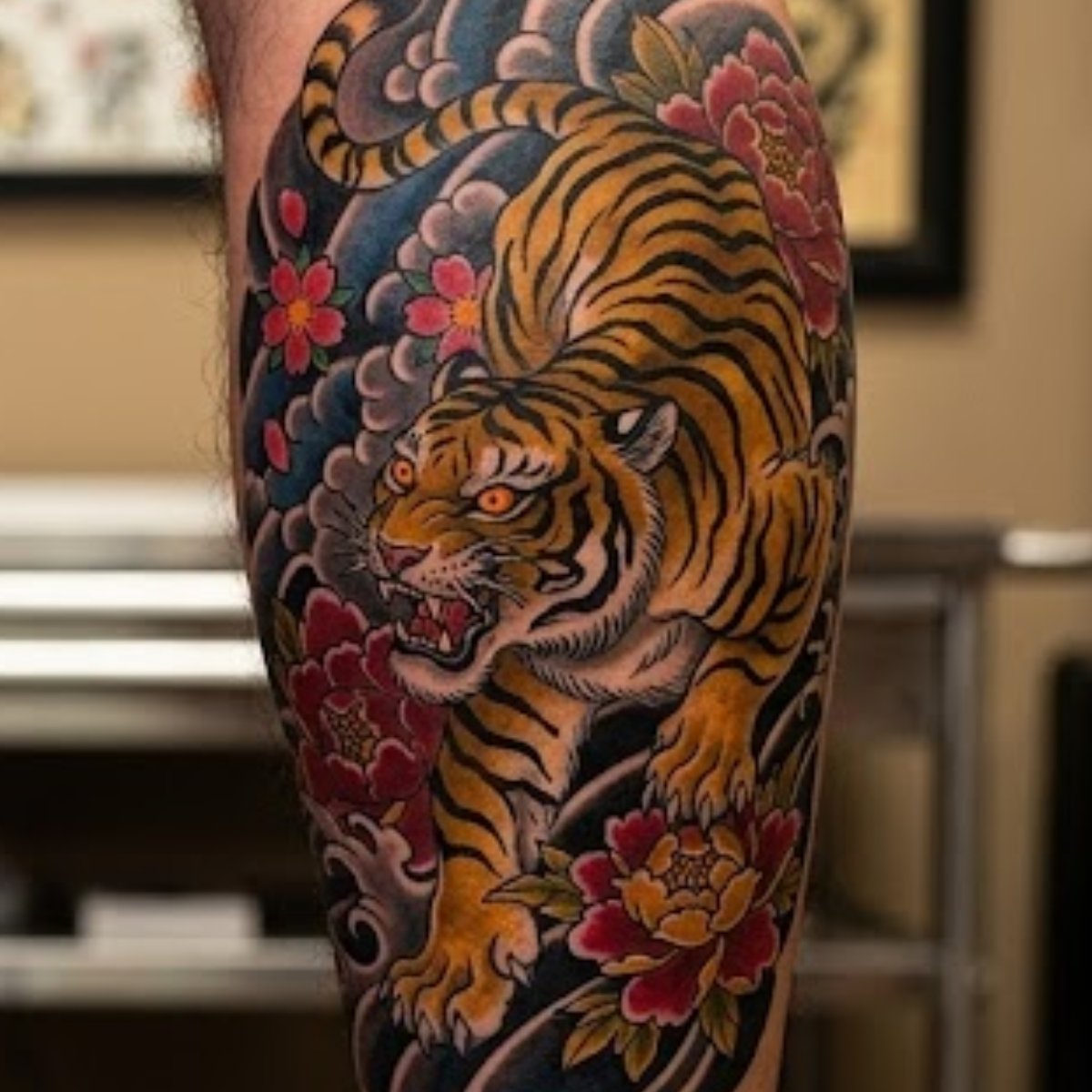
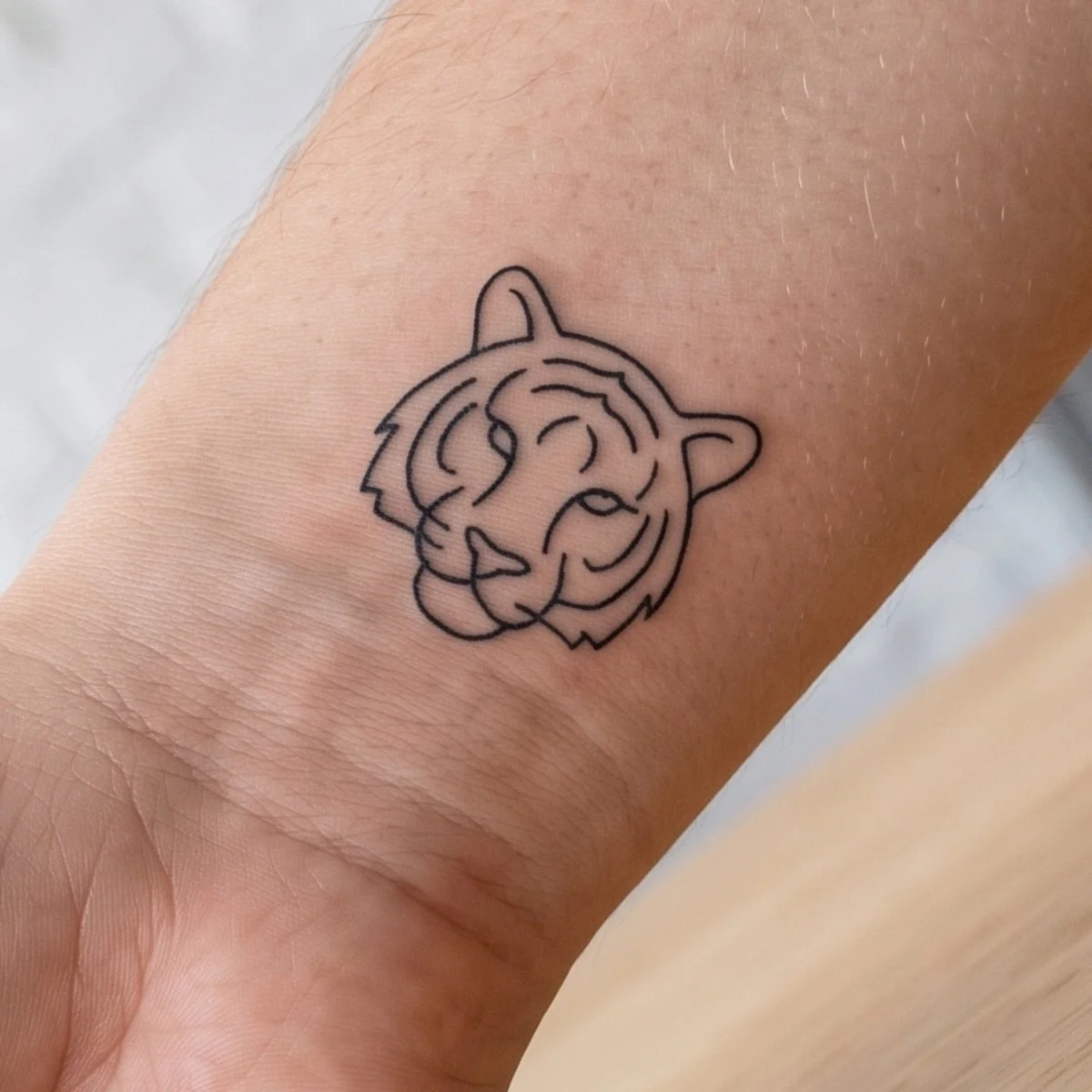
The style you choose dictates how your tattoo will age and how its message is conveyed visually.
1. Traditional Japanese (Irezumi)
Japanese tiger tattoos emphasize dynamic motion, fluid energy, and storytelling. They are rarely standalone portraits; instead, they integrate traditional background elements (Gakubori) like crashing waves, wind bars, and seasonal flora (such as peonies or cherry blossoms) to create a sense of harmony between power and grace.
2. Realism & Micro-Realism
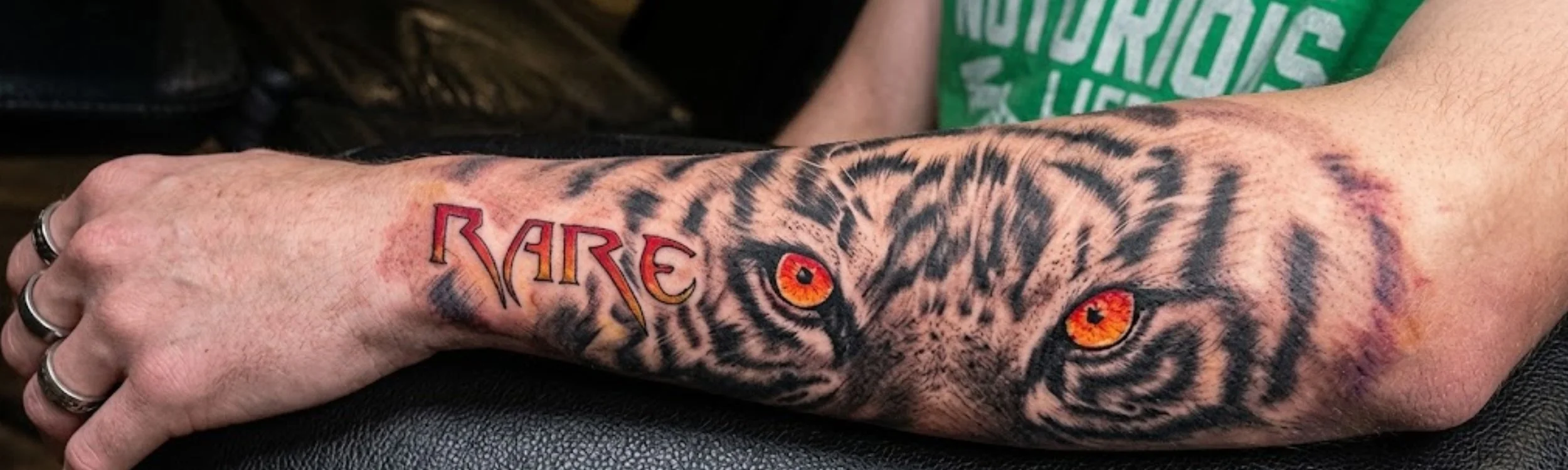
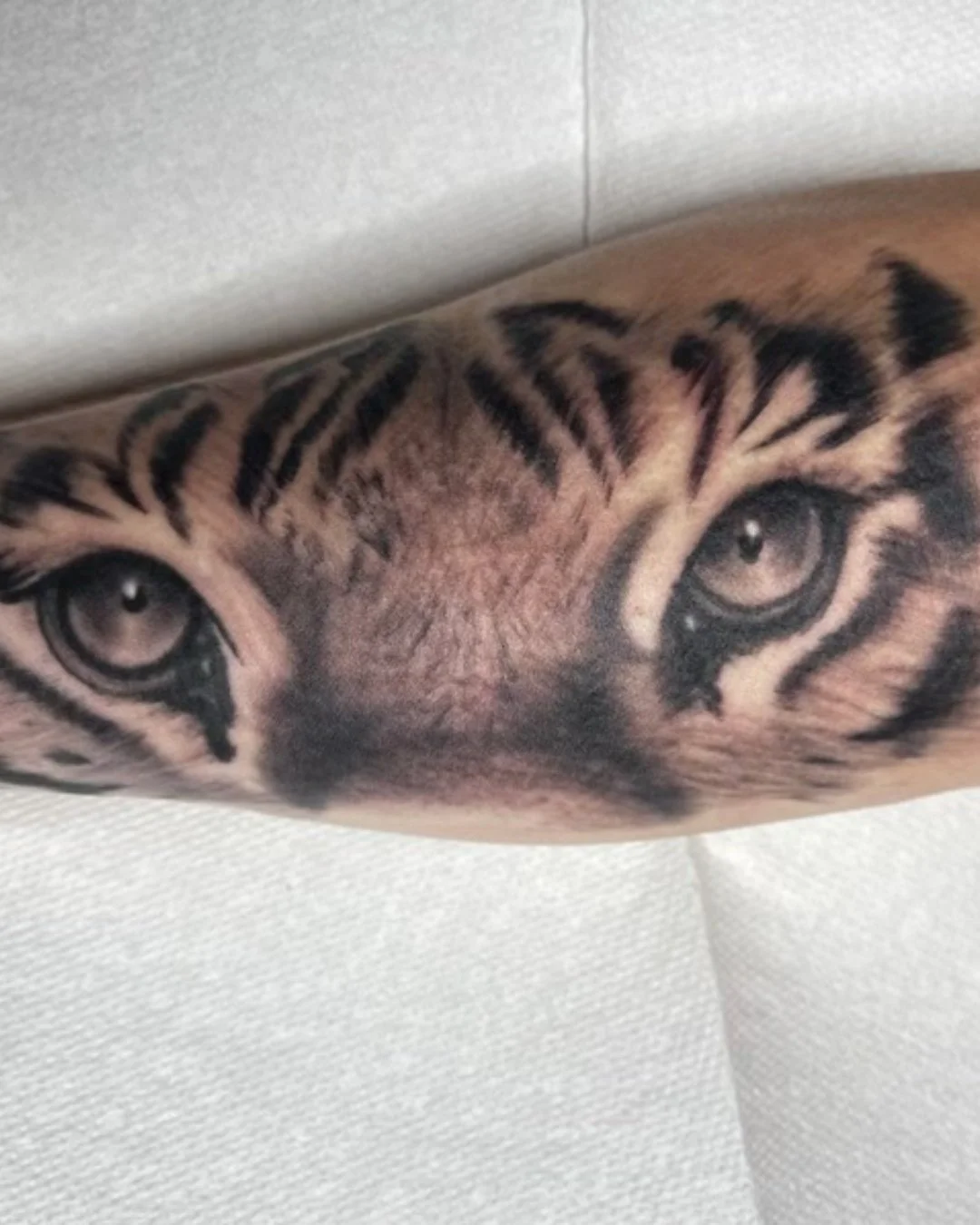
Hyper-realistic tiger tattoos focus on micro-details: the texture of the fur, the intensity of the eyes, and light reflecting off teeth. Realism demands a larger canvas to maintain detail over time.
Color Realism: Emphasizes striking orange hues, deep blacks, and vivid green or blue eyes.
Black & Grey Realism: Focuses on shadow play, smooth gradients, and sharp contrast for a dramatic portrait.
3. American Traditional & Neo-Traditional
American Traditional: Features thick black outlines, a saturated but limited color palette (red, yellow, green), and simplified, graphic iconography (e.g., a crawling tiger or a tiger fighting a snake). Built for maximum longevity.
Neo-Traditional: Expands on classic bold lines by adding varied line weights, richer color palettes (jewel tones), and illustrative floral framing.
4. Fine-Line & Minimalist
A modern trend appealing to those seeking subtle symbolism. Fine-line tiger tattoos use precise single-needle work to outline the silhouette or focus solely on a minimalist depiction of the tiger’s eyes.
Placement Strategy: Matching Design to Body Anatomy
Tattoo longevity and visual impact depend heavily on how a design contours with your body's muscles.
Full Back / Chest: The ultimate canvas for large-scale Japanese Irezumi or detailed realistic scenes. Allows enough space for full-body poses, dynamic movement, and rich environmental backgrounds.
Forearm & Arm Sleeve: Ideal for vertical tiger compositions (a tiger prowling downward) or detailed tiger-face portraits. Provides high visibility and smooth movement along the arm's muscle groups.
Thigh & Leg Sleeve: Excellent for long, sprawling designs that incorporate secondary elements like bamboo stalks, dagger motifs, or waves.
Shoulder & Ribs: Highlights movement and anatomical contouring, making a snarling or crouching tiger look as if it is moving with your breathing and body motion.
Tiger Tattoo Scaling Calculator
Calculate scale feasibility, skin anatomy movement distortion, and ink longevity science for your target design.
Design Tips for Customization
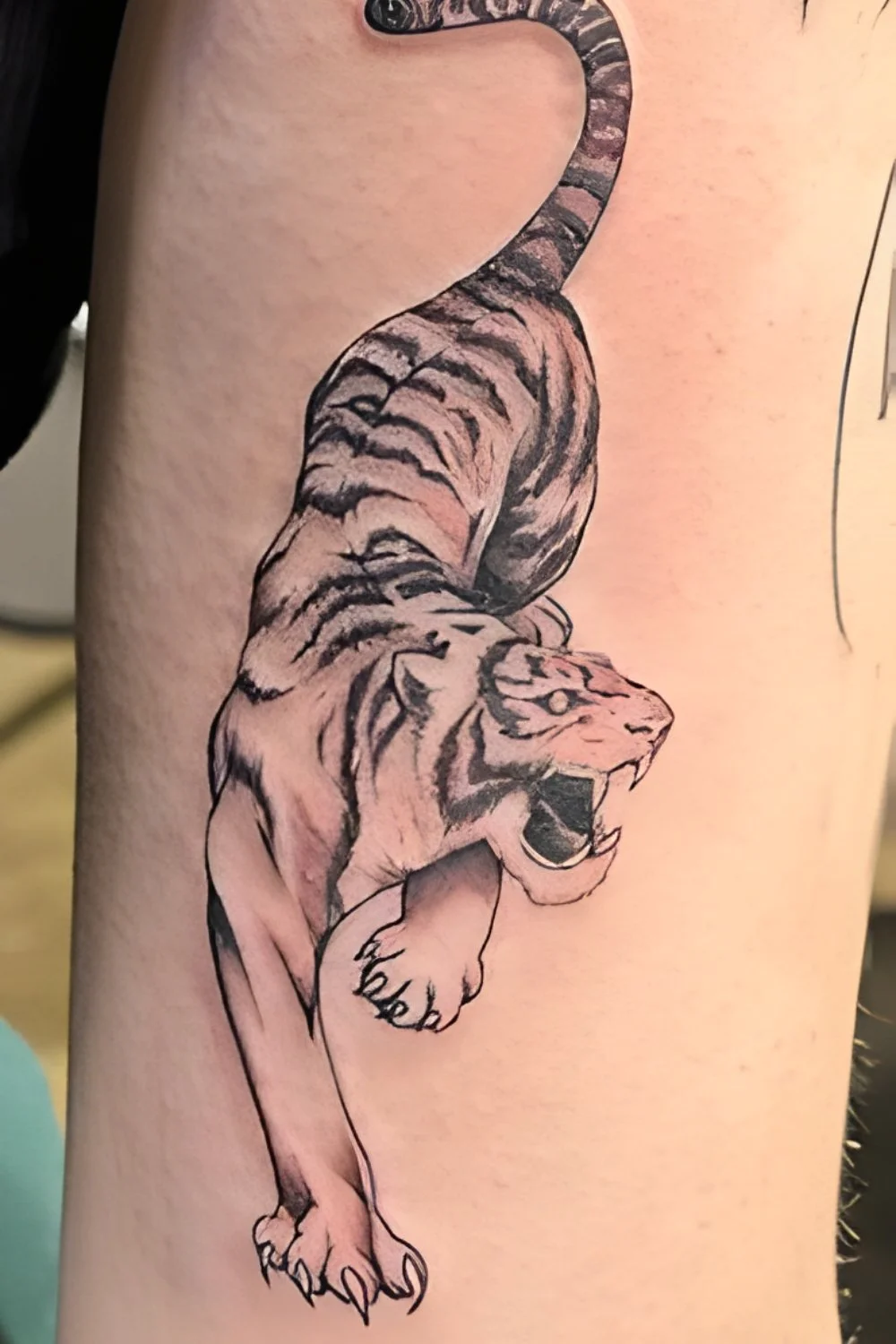
To ensure your tattoo is a custom, non-repetitive piece of art, consider these design variables:
Facial Expression: A roaring or snarling tiger conveys aggressive strength, defense, and warning. A calm, watchful tiger conveys silent authority, wisdom, and inner peace.
Complementary Motifs:
Peonies: Symbolize wealth, honor, and delicate contrast against fierce power.
Dragons (Ryu-Tora): Symbolizes the ultimate balance between ground power (tiger) and celestial authority (dragon).
Koi Fish: In Eastern tattooing, pairing a land predator like the tiger with a resilient swimmer highlights balance between fierce physical dominance and quiet perseverance over life's obstacles. Read our guide on koi fish tattoo meanings to explore how water elements contrast with land creatures.
Daggers / Swords: Represents triumphing over betrayal or fighting through hardship.
Contrast & Framing: Ask your artist to use negative space or dark background shading to make the tiger's stripes pop.
If you are looking to design a piece tailored exclusively to your vision, explore how artists create custom tattoos that translate personal narratives into dynamic body art. You can also explore our primary animal tattoo meaning guide to see how various creatures interact symbolically.

Collin Joiner
Expert Insights: Working with Your Tattoo Artist
"A common mistake clients make is trying to fit too much micro-detail into a small area. Tigers have complex stripe patterns and texture. To make a tiger tattoo age gracefully over 10 to 20 years, you need scale, proper contrast, and negative space. Let the tiger breathe on the skin. — Collin Senior Custom Tattoo Artist
When booking your custom consultation, bring reference images that highlight:
The pose/expression you prefer (calm vs. aggressive).
The art style you like (Irezumi, Realism, Traditional).
The tonality (high-contrast black-and-grey vs. full saturation).
Conclusion
A tiger tattoo is far more than a striking visual—it is a permanent armor of courage, independence, and personal power. By pairing deep historical symbolism with the right art style and deliberate placement, you ensure your piece serves as an enduring reflection of your unique journey.
When you are ready to make your vision a reality, partner with top rated tattoo shops in Columbus Ohio to collaborate with specialist artists who can craft a custom composition built to age gracefully for a lifetime.


Frequently asked questions
-
In Asian heritage, tigers represent protection, royal strength, and spiritual defense against evil forces. In modern Western tattoo culture, they generally represent personal sovereignty, physical prowess, and resilience through hardship.
-
Longevity depends on the style and placement. American Traditional and Japanese styles age exceptionally well due to heavy black linework and bold contrast. Micro-realism or small fine-line tiger tattoos require larger scaling or periodic touch-ups to keep fine fur details from blurring together over time.
-
In Japanese Irezumi, the tiger and dragon together represent Yin and Yang, a balance of forces. The tiger represents grounded, earthy physical power and passion, while the dragon represents atmospheric, spiritual authority and wisdom.
Read more…