Koi Fish Tattoo Meaning: Symbolism, Perseverance, and Transformation
original published date: jan 28, 2026
major update date:
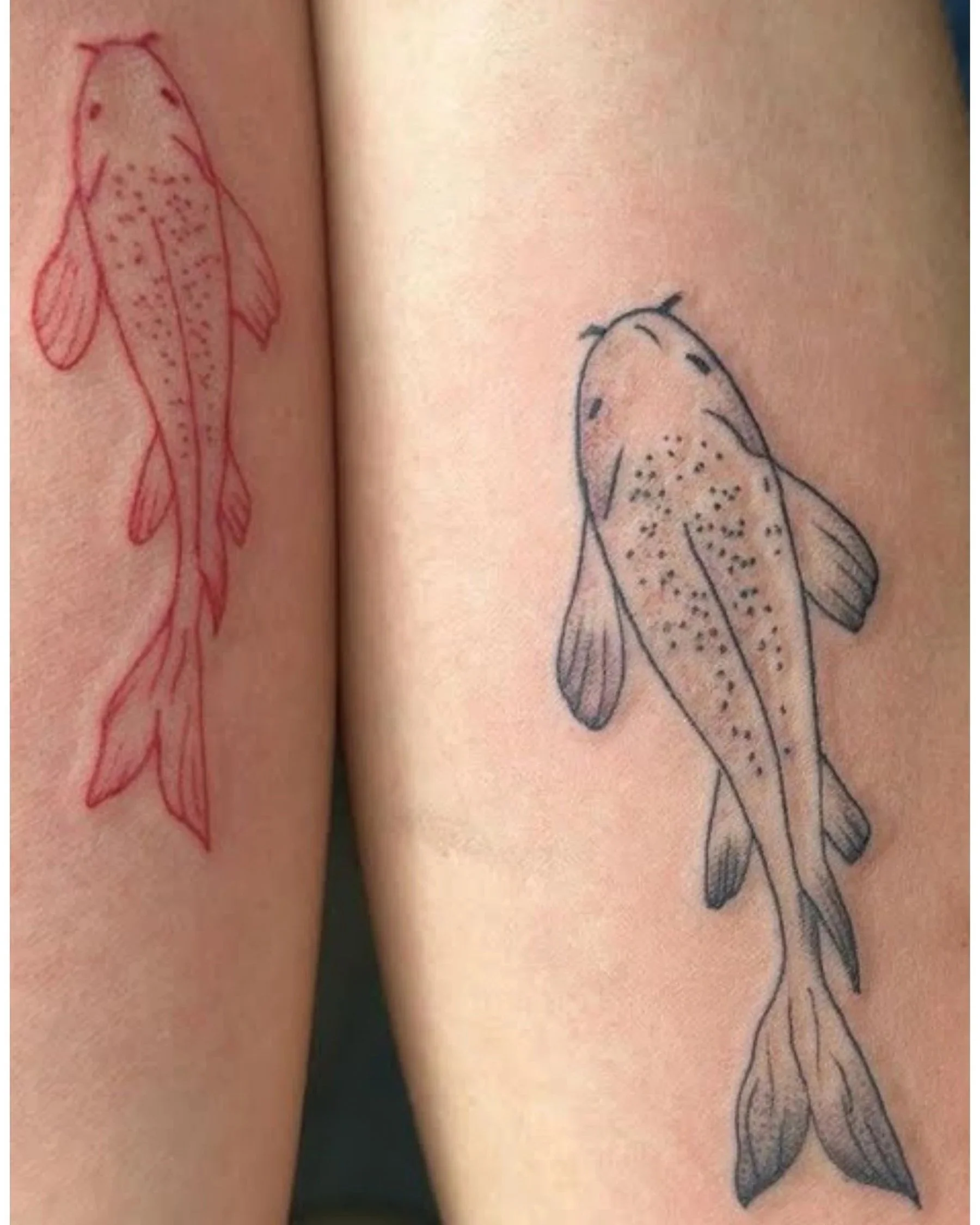
Tattoos are personal statements, reflections of identity, and storytellers of our inner journeys. Among iconic aquatic motifs, koi fish tattoos hold a special allure. Revered for their physical strength, vibrant colors, and relentless drive, koi fish resonate with people who value perseverance, personal evolution, and spiritual balance.
Whether you are planning your first tattoo or creating a full traditional sleeve, understanding the deeper layers behind koi fish tattoo symbolism will guide your design choices and ensure your piece carries genuine personal meaning. For a broader look at how different animals express stories in ink, explore our animal tattoo meaning guide.
Koi Fish Tattoo Symbolism at a Glance
The core meanings associated with koi tattoos vary depending on color, pairing elements, and directional movement:
| Theme / Motif | Primary Symbolism | Cultural & Artistic Context |
|---|---|---|
| Upstream Swimming | Active struggle, overcoming hardship, ambition | Based on the Dragon Gate legend; symbolizes overcoming adversity |
| Downstream Swimming | Reflection, goals achieved, moving with life's flow | Represents overcoming a past challenge or embracing newfound peace |
| Dragon Koi | Ultimate triumph, transformation, power | The final stage of the koi's journey; represents reaching peak potential |
| Yin Yang / Dual Koi | Balance, harmony, duality, strong relationships | Rooted in Taoist philosophy; reflects opposing forces working together |
| Lotus & Koi | Purity, spiritual growth, rebirth through adversity | Common in Buddhist art; symbolizes rising clean out of muddy waters |
The Heart of the Koi: Meaning & Legendary Origins
At its core, a koi fish tattoo represents resilience and personal evolution. Known as Nishikigoi (brocaded carp) in Japan, these fish are celebrated for their ability to swim against powerful currents.
The Legend of the Dragon Gate
The most enduring myth behind koi symbolism comes from ancient folklore. According to legend, thousands of koi attempted to swim up the Yellow River against fierce currents. Upon reaching a massive waterfall known as the Dragon Gate, most turned back.
A single koi persevered, leaping over the falls through sheer determination. The gods rewarded its relentless spirit by transforming it into a celestial dragon. Because of this legend, a koi tattoo—especially one paired with a dragon—symbolizes ultimate triumph over adversity. As documented in cultural studies on traditional East Asian iconography by Encyclopaedia Britannica, the koi carp remains the ultimate symbol of perseverance and triumph against steep odds.
Cultural and Historical Significance
Understanding the global traditions behind koi imagery adds depth to your body art.
1. Japanese Tradition & Samurai Heritage
In Japan, koi are tied to courage, honor, and fortitude. Historically, samurai admired the koi for its stoic demeanor—when caught, a koi lies still on the cutting board, facing its fate without trembling, much like a samurai facing combat. Koi banners (Koinobori) are also flown during Children's Day in Japan to wish youth growth, vigor, and strength.
2. Buddhist Teachings: Swimming Toward Enlightenment
In Buddhist philosophy, the koi represents the soul's journey through the "muddy waters" of life toward spiritual awakening. Just as the koi navigates turbulent waters, an individual must endure life's struggles to attain inner peace, balance, and wisdom.
3. Western Perspectives & Modern Cultural Sensitivity
In Western body art, koi tattoos primarily celebrate individual achievements, survival over trauma, and personal growth. However, when choosing traditional Japanese iconography (Irezumi), working with knowledgeable artists ensures that supporting elements—like wind bars, water waves, and seasonal flowers—are arranged in a way that respects the art form's rich history.
Color Meanings in Koi Tattoos
The color of your koi alters its narrative tone and symbolic focus:
Red / Pink Koi: Represents passionate love, family bonds, energy, and intense courage. In traditional Japanese culture, red koi often symbolize strong maternal or familial affection.
Black Koi: Symbolizes overcoming severe adversity, personal transformation, and surviving deep pain or life-altering struggles.
Gold / Yellow Koi (Yamabuki): Represents wealth, financial success, prosperity, and good fortune in career or business.
Blue Koi: Associated with tranquility, inner peace, independence, and calm determination under pressure.
Platinum / Silver Koi: Symbolizes clear goals, purity, and fulfillment in business or personal life.
Popular Koi Tattoo Designs & Paired Motifs
Style and supporting motifs allow you to tailor your koi tattoo to your personal journey.
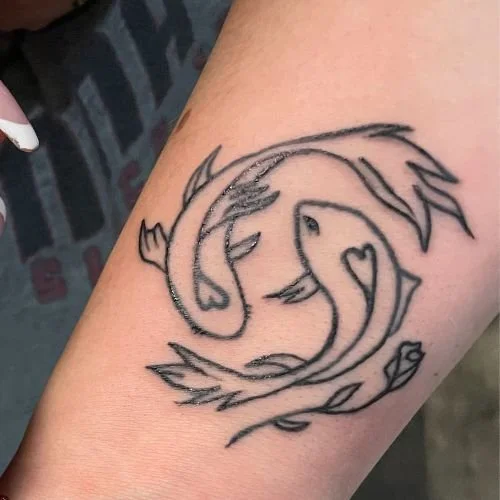
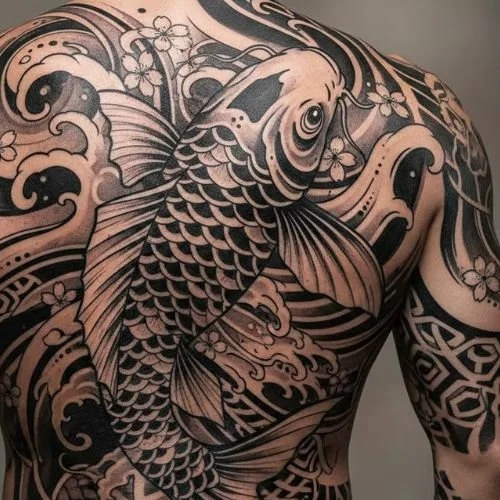
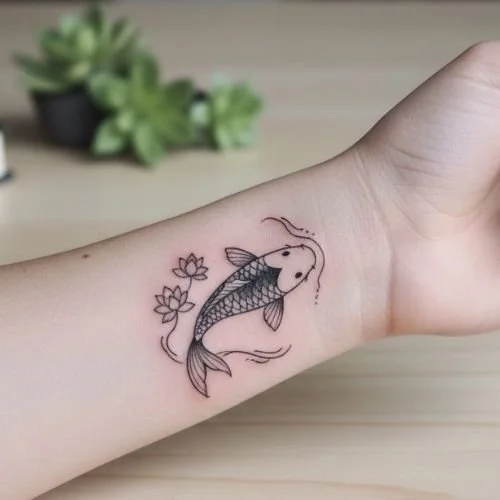
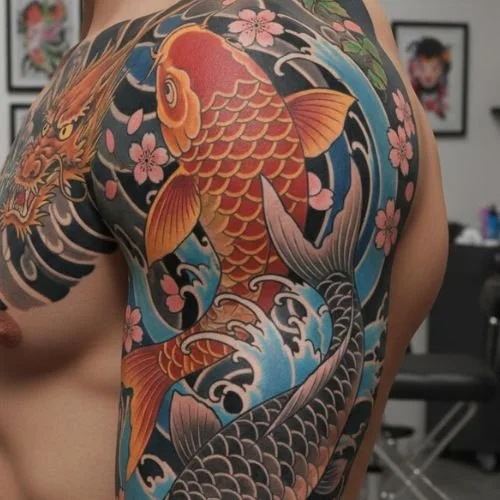
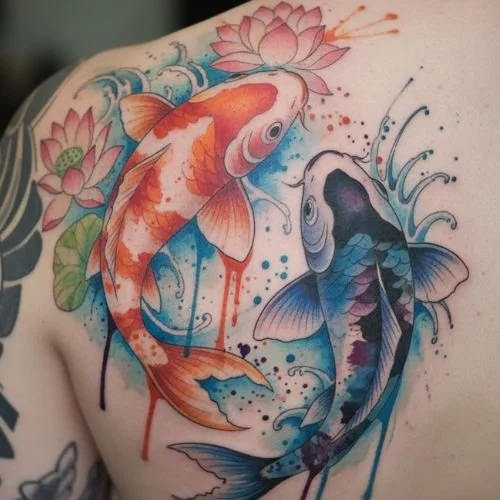
Single Koi vs. Two Koi (Yin Yang)
Single Koi: Focuses on individual endurance, personal milestones, and singular focus.
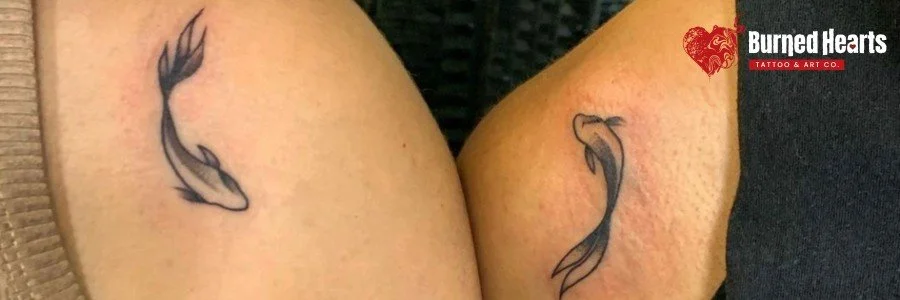
Two Koi / Yin Yang: Features two fish swimming in a circular motion, embodying balance, harmony, and the interdependence of opposing forces.
Supporting Elements
Koi & Lotus Flower: The lotus grows in muddy water yet blooms clean, making it the perfect companion to a koi swimming upstream. Together, they represent purity, rebirth, and spiritual triumph.
Koi & Cherry Blossoms (Sakura): Cherry blossoms symbolize the fleeting, precious nature of life. Combined with a koi, this motif reminds us to face hardship with strength while appreciating every moment.
Koi & Water Waves / Fire: Water waves emphasize the struggle of the journey, while pairing fire with water represents raw duality and internal balance.
Placement, Direction, and Anatomical Flow
Where and how you place your koi tattoo changes both its meaning and visual impact:
Upstream vs. Downstream Direction
Upstream (Facing Up): You are actively in the middle of a battle, pushing toward a goal, or fighting through a tough season in life.
Downstream (Facing Down): You have successfully overcome your obstacles, reached your goals, and are now moving forward in peace with the natural flow of life.
Canvas Placement
Full Back & Chest: Ideal for sweeping compositions involving dragon koi, large waterfalls, and surrounding waves. If you're considering a large-scale piece, explore our comprehensive back tattoo placement guide to understand zonal mapping and anatomical flow.
Forearm & Arm Sleeves: Perfect for depicting motion. As your muscles move, the koi appears to swim naturally along your arm.
Legs & Calves: Excellent vertical canvases for upstream koi leaping over waterfalls or rocks.
For a completely unique piece that wraps naturally around your body's curves, consult with studios specializing in high-end custom tattoos.
KOI TATTOO DERMAL HEALING SIMULATOR
Observe sub-dermal pigment encapsulation, epidermal skin cell turnover, and plasma weeping across a 30-day recovery timeline.
STAGE 1: INITIAL DERMAL RECOVERY (DAYS 1–3)
Dermatological Protocol Checklist

Di Drago - Owner of Burned Hearts Tattoo
"A traditional koi piece relies heavily on fluid motion and background composition The fish itself is only half the story. How the surrounding waves, wind bars, and flowers curve around your body determines whether the tattoo feels stiff or alive."
We always advise clients to think carefully about the direction of the fish. An upstream koi placed on a forearm should flow up toward the shoulder to emphasize momentum and strength. Working with an experienced artist ensures the composition complements your body's natural lines." - DI DRAGO, owner of Burned hearts tattoo
Caring for Your Koi Tattoo
Intricate line work, soft shading, and vibrant colors require careful long-term maintenance:
Immediate Aftercare: Keep the area clean using gentle, fragrance-free soap. Apply thin layers of specialized tattoo moisturizer and avoid soaking the piece in water during the initial healing phase.
Preserving Color Vibrancy: Koi tattoos often feature bright reds, blues, and golds. Once fully healed, apply high-SPF sunscreen when exposed to the sun to prevent fading over time.
Moisturizing: Keep healed skin hydrated to maintain crisp contrast in fine lines and dark background shading.
Conclusion
Koi fish tattoos are symbolic representations of resilience, transformation, ambition, and inner balance. By understanding their cultural origins, choosing meaningful colors, and selecting a placement that complements your body, you can create a piece of art that tells your personal story.


If you are ready to bring your vision to life, connect with top rated tattoo shops in Columbus, Ohio, to schedule a session and transform your ideas into an enduring masterpiece.
Frequently Asked Questions
-
An upstream koi symbolizes active struggle, perseverance, ambition, and fighting to overcome current challenges or achieve a major life goal.
-
No, as long as it is done thoughtfully. Koi tattoos are celebrated globally for their message of strength. Working with experienced artists ensures traditional elements like water, wind, and flowers are rendered with artistic integrity.
-
A black koi represents successfully overcoming severe adversity, surviving deep pain or trauma, and emerging stronger through personal growth.
Read More