Guide to Flower Tattoos: Meanings, Styles, Placement, and Aging
ORIGINAL PUBLISHED DATE: OCT 25, 2025
MAJOR UPDATE DATE: Sept 1, 2026
Flower tattoos are a timeless cornerstone of body art. Beyond their immediate visual appeal, botanical pieces carry centuries of symbolism, ranging from love and personal metamorphosis to strength through adversity.
Whether you’re planning a micro-fine-line wrist accent, an American Traditional bold rose, or a sweeping black-and-grey sleeve, understanding how design, placement, and technique interact ensures your tattoo looks stunning on day one and stays crisp for decades. To see how floral pieces are evolving alongside broader industry movements, check out our guide to tattoo trends in 2026.
Floriography: Decoding Botanical Symbolism
Before committing ink to skin, understanding floriography (the Victorian practice of communicating through flower arrangements) helps pair your personal story with the right species.
| Flower | Core Symbolism | Pro Artist Placement Tip |
|---|---|---|
| Rose | Romance, devotion, balance (Red = passion, White = clarity, Black = resilience) | Works across all placements; circular shape naturally caps shoulders and knees. |
| Lotus | Spiritual rebirth, rising above adversity, inner purity | Fits best on flat, centered canvases like the sternum, back, or upper chest. |
| Sunflower | Unwavering optimism, vitality, loyalty | Thrives on large canvases like the forearm or thigh where color gradients can pop. |
| Peony | Honor, wealth, balance of delicacy and power | Excellent for wrapping around joints, hips, and dynamic sleeve transitions. |
| Lavender | Tranquility, healing, quiet composure | Ideal for single-needle execution down linear bones (collarbone, inner arm). |
| Cherry Blossom | Impermanence (Mono no Aware), new beginnings | Flowing branches naturally follow organic body lines like the ribs or spine. |
Style Guide: How Execution Dictates Longevity
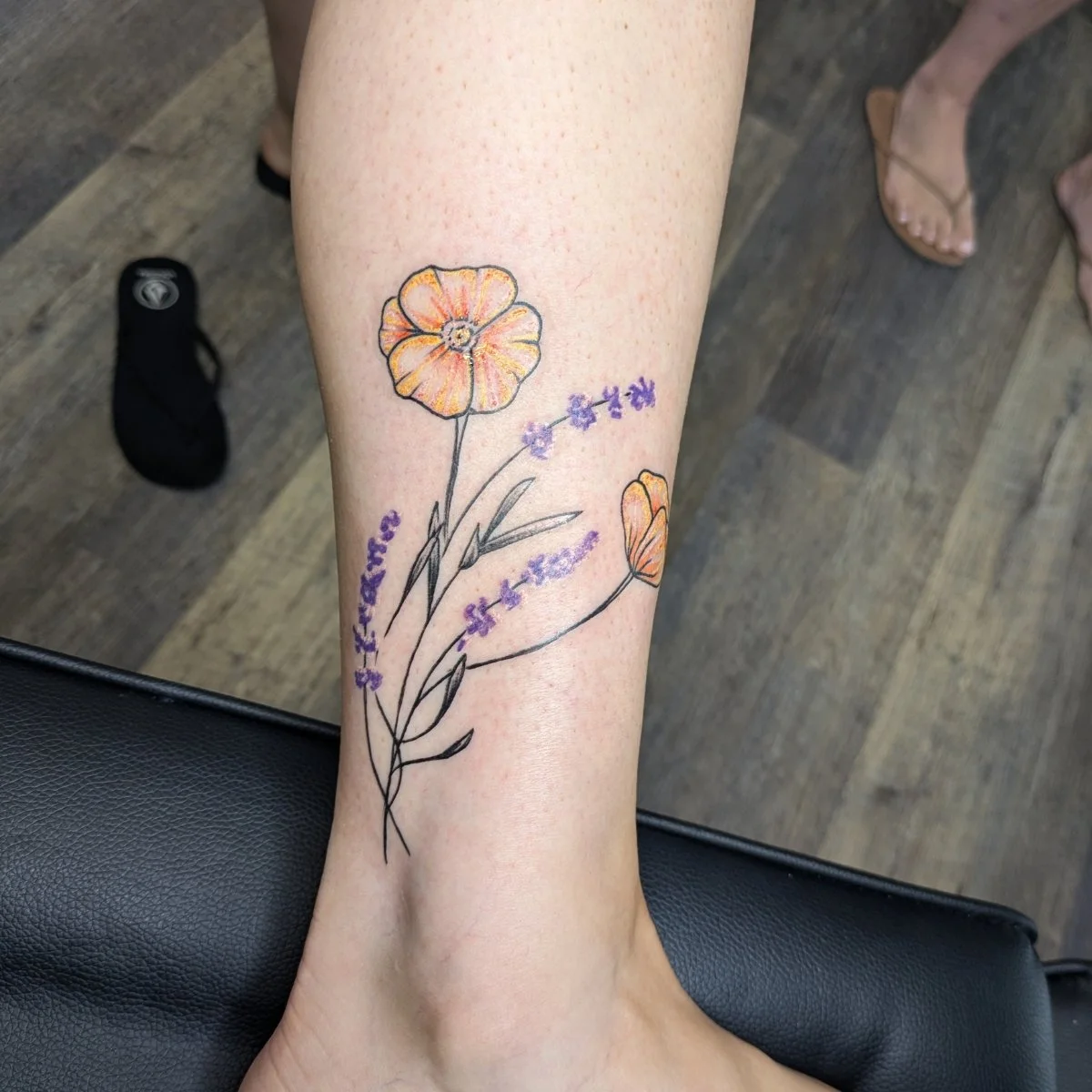
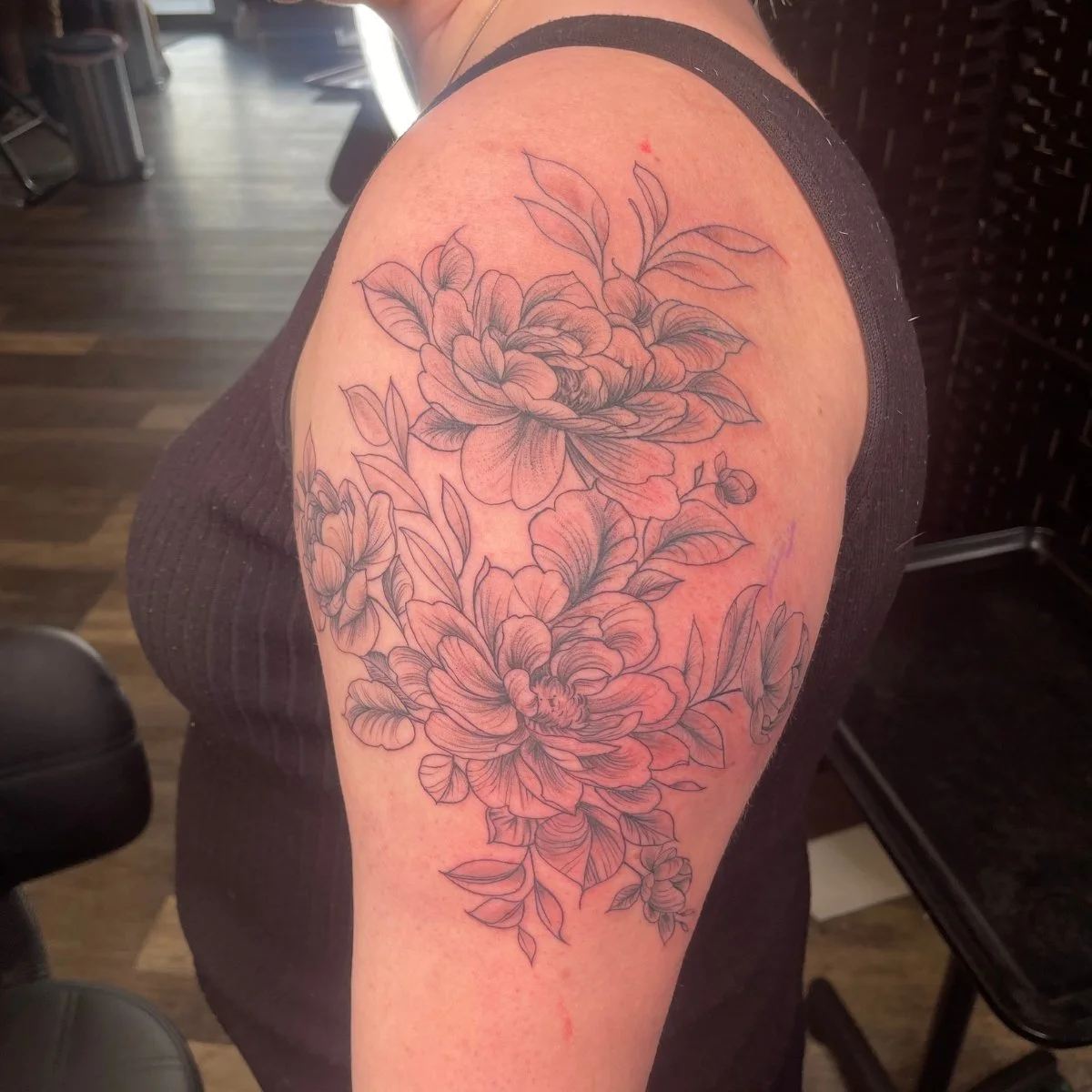
A tattoo artist doesn't just draw a flower; they structure it to withstand your body's natural aging process over time.
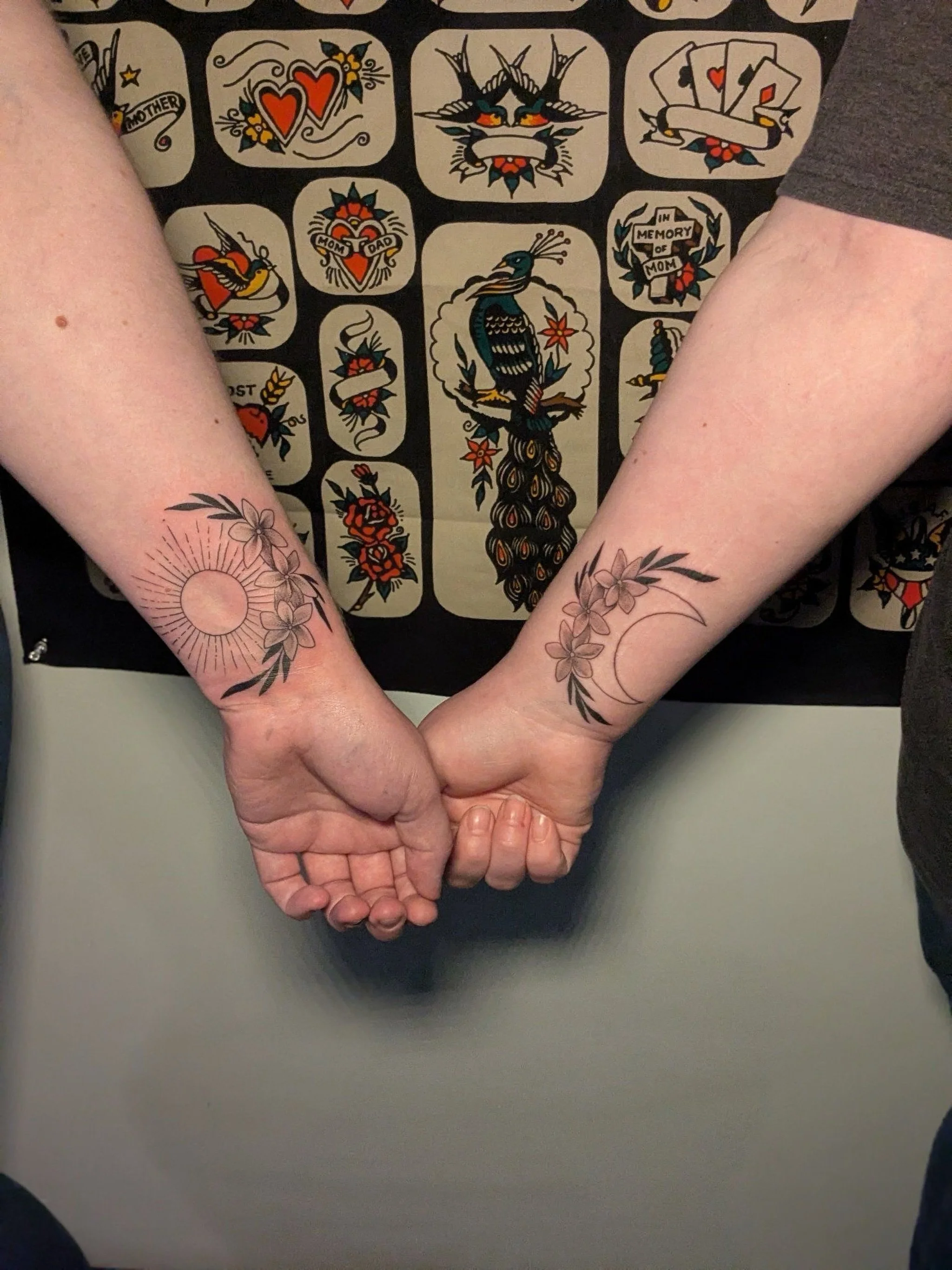
Fine-Line & Micro-Realism: Uses thin needles for soft, whisper-light detail. Best suited for low-friction areas like the inner arm or upper torso.
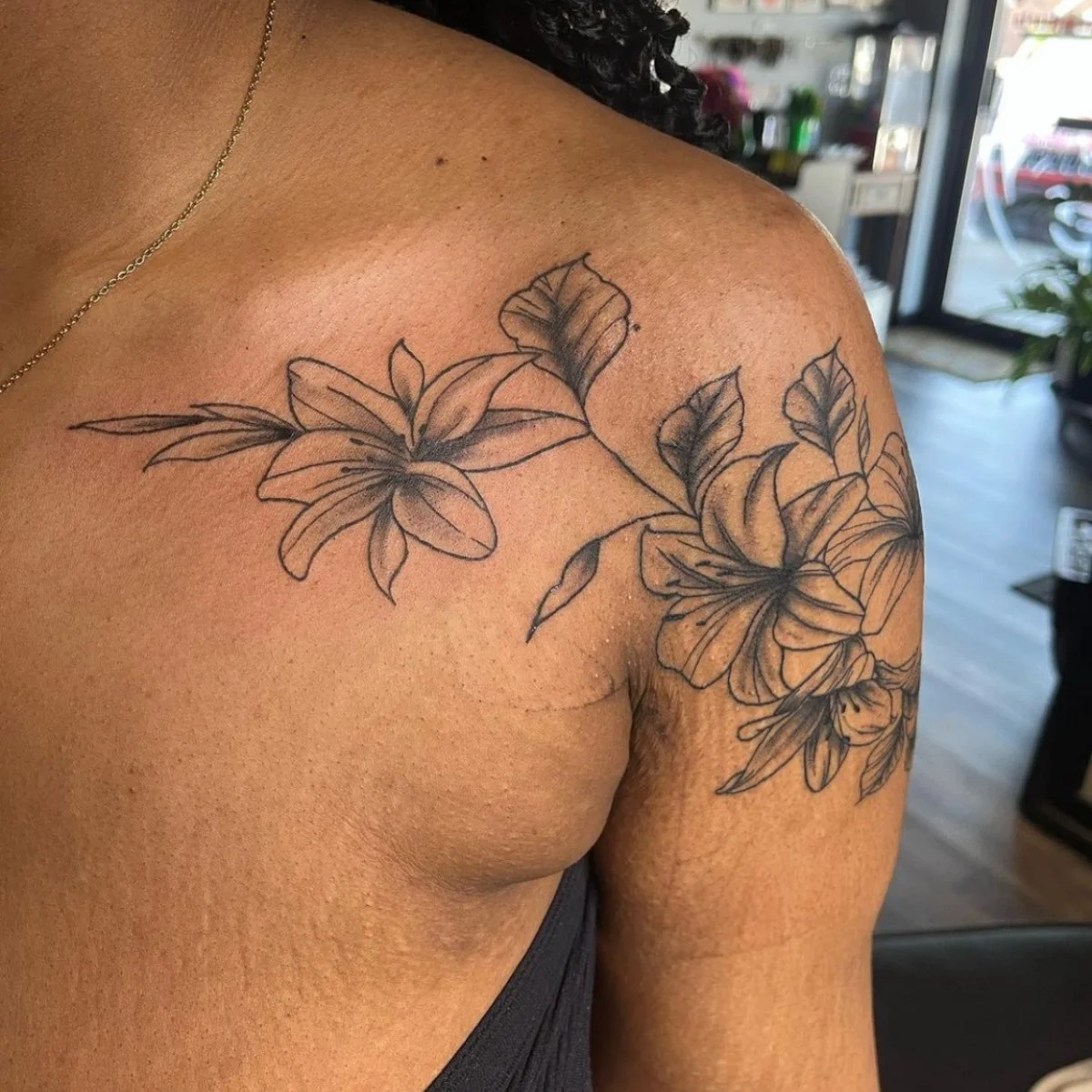
Black & Grey Illustrative: Leverages whip-shading and bold contrast to create three-dimensional depth. This is widely considered the most durable style for long-term retention.
Watercolor: Focuses on soft wash gradients without hard outline boundaries. Requires an artist skilled in color theory to ensure saturated core pigments maintain structure over time.
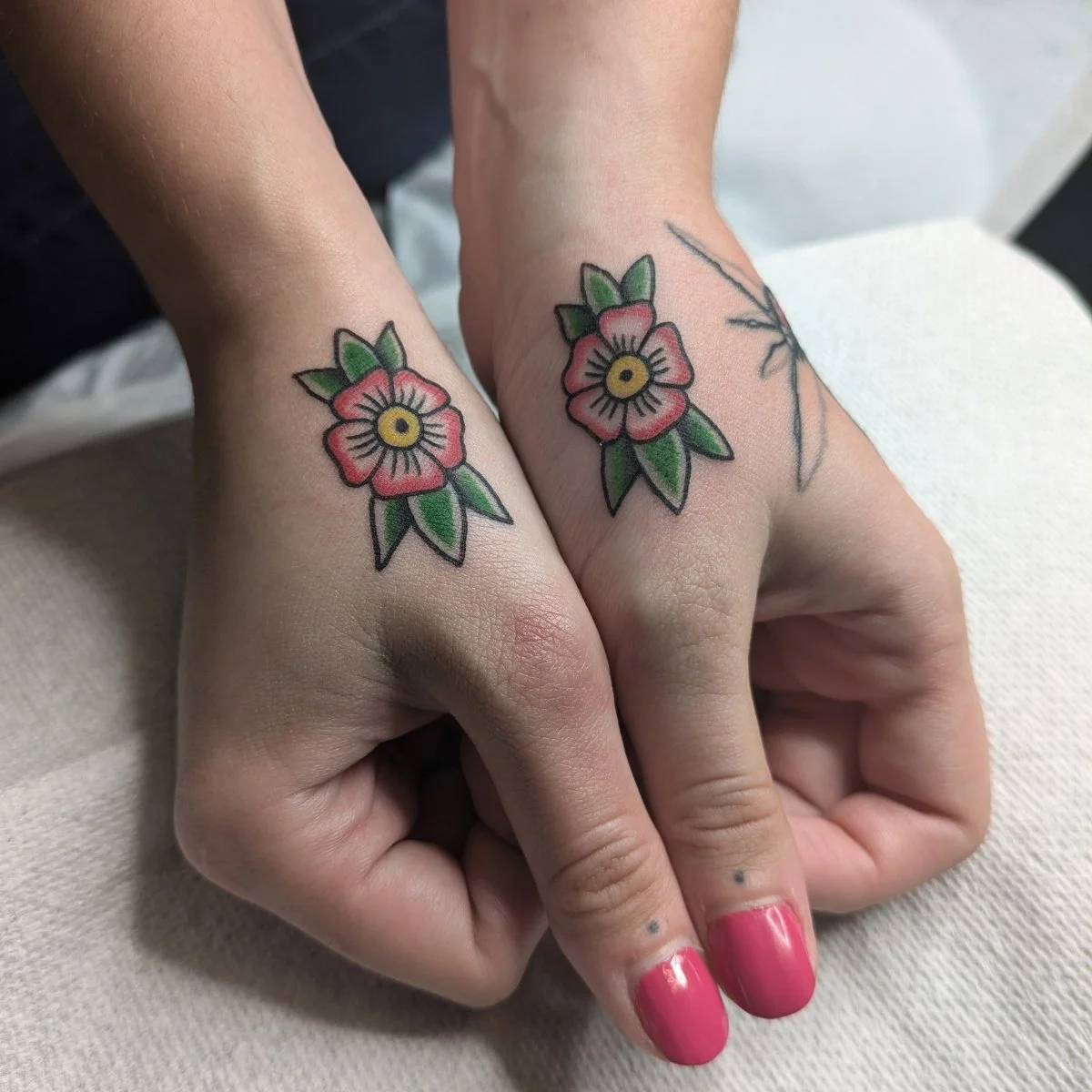
Japanese (Irezumi) & Neo-Traditional: Uses heavy black line work and rich, saturated pigments. Large peonies, chrysanthemums, and lotus flowers in this style stand up exceptionally well to time and sun exposure.
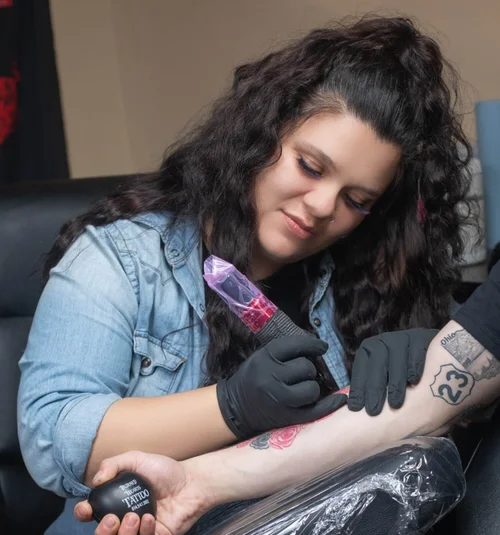
Hollyanna Jandarian
Artist Insight on Fine-Line & Micro-Realism:
" ltra-delicate single-needle (1RL/3RL) floral tattoos are gorgeous, but skin expands and shifts over time. To keep fine-line petals from blurring into a continuous smudge five years down the road, we engineer 'breathable' negative space into the center of every petal."
— Fine Line Tattoo Expert, Burned Heart Tattoo
Anatomy & Placement: Designing for Movement
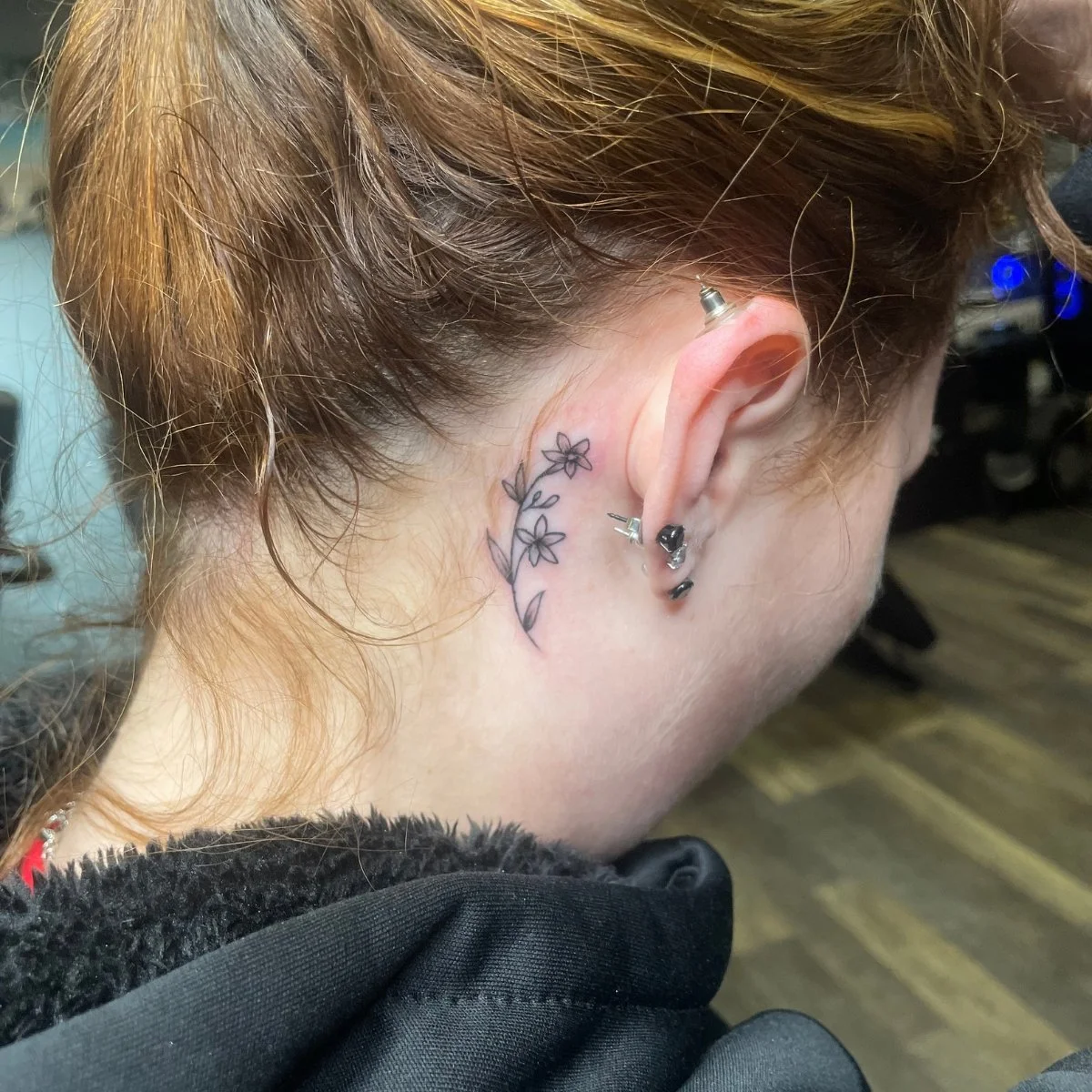
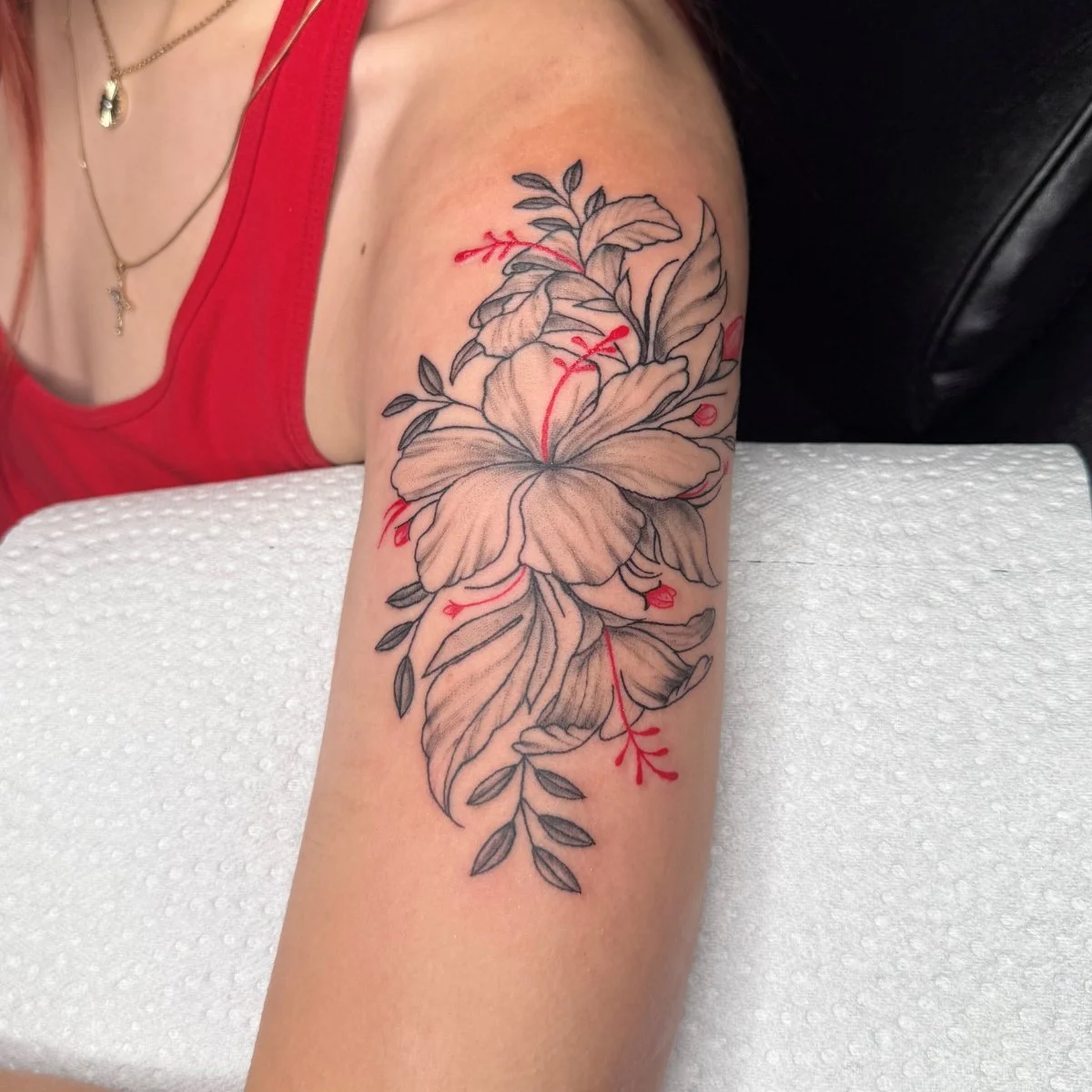
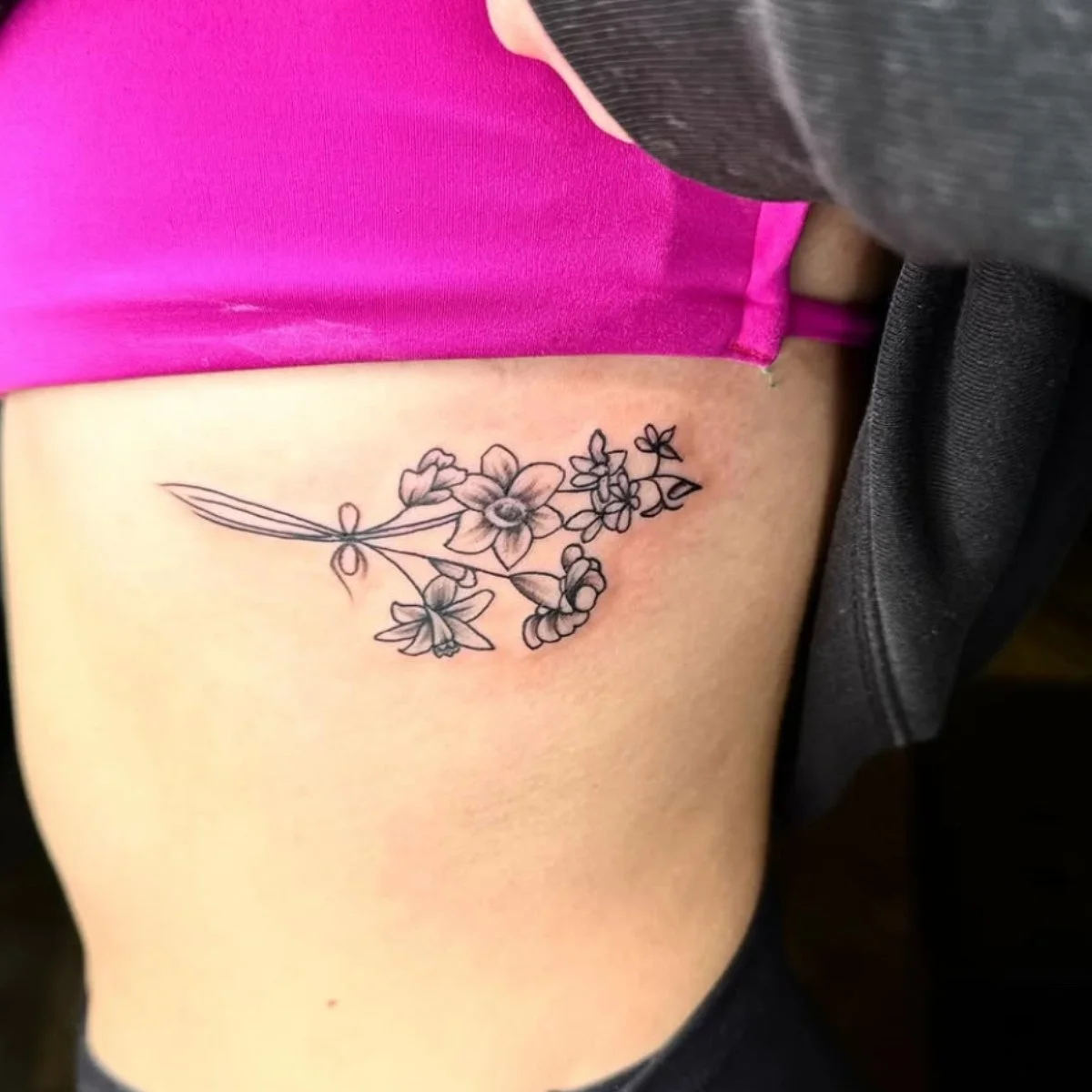
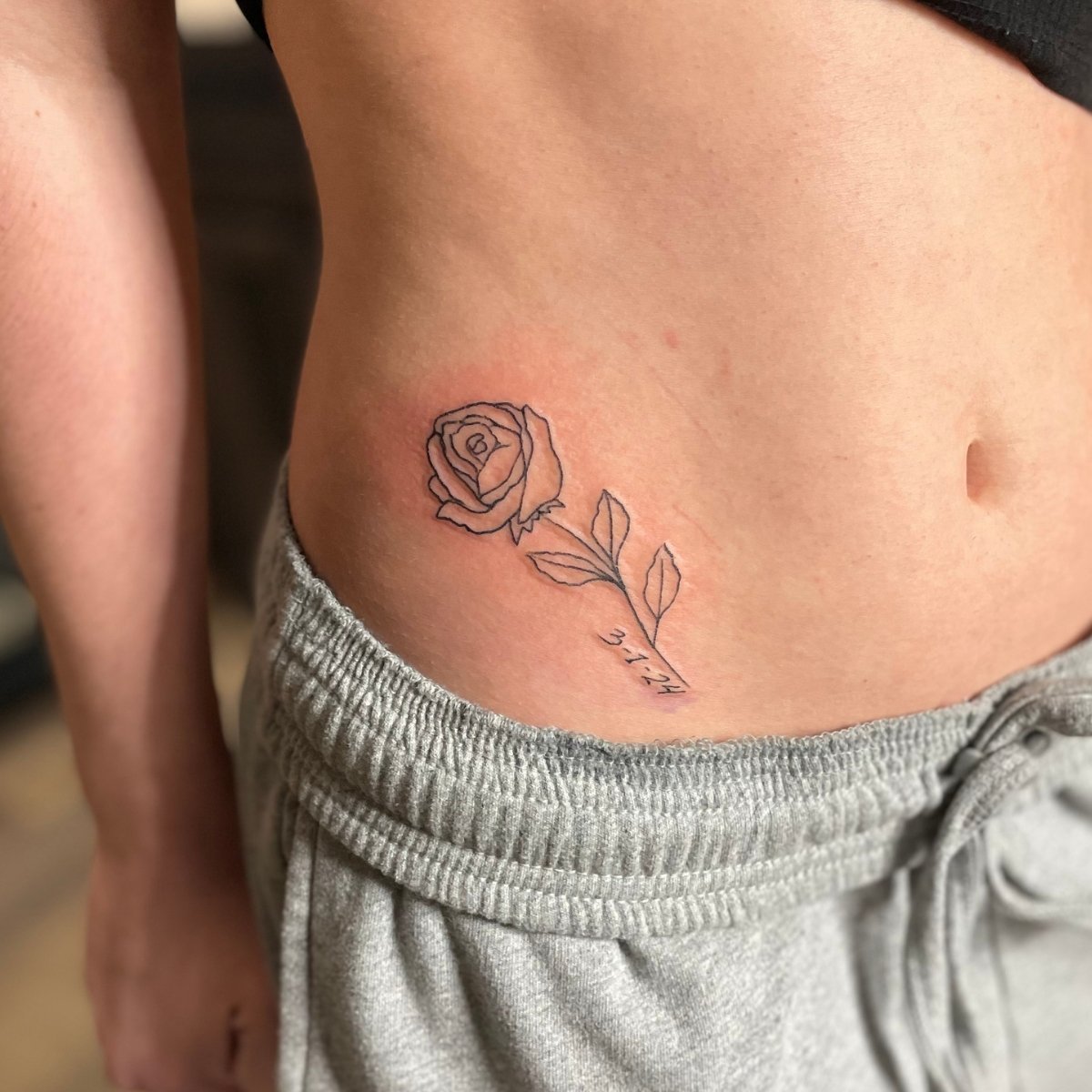
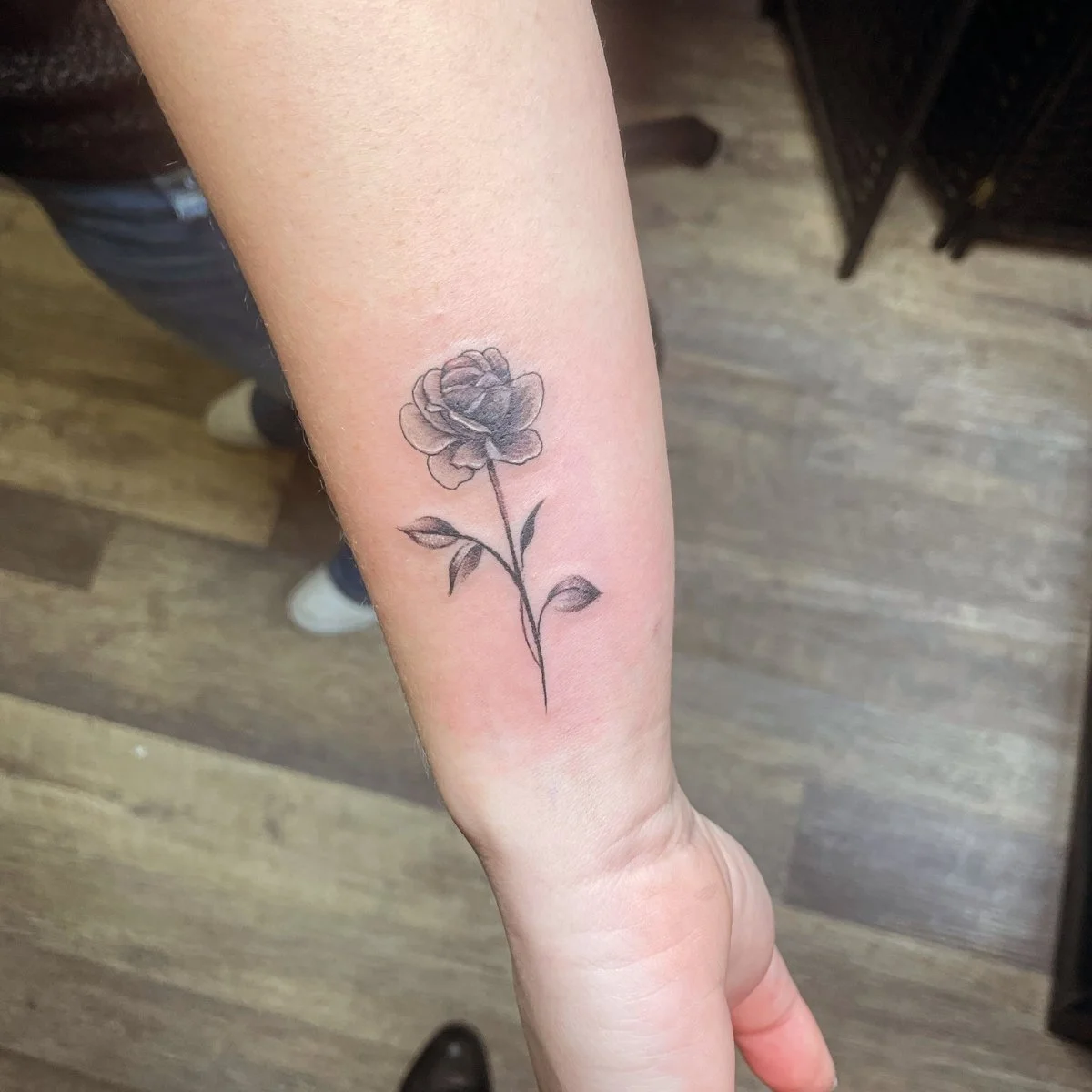
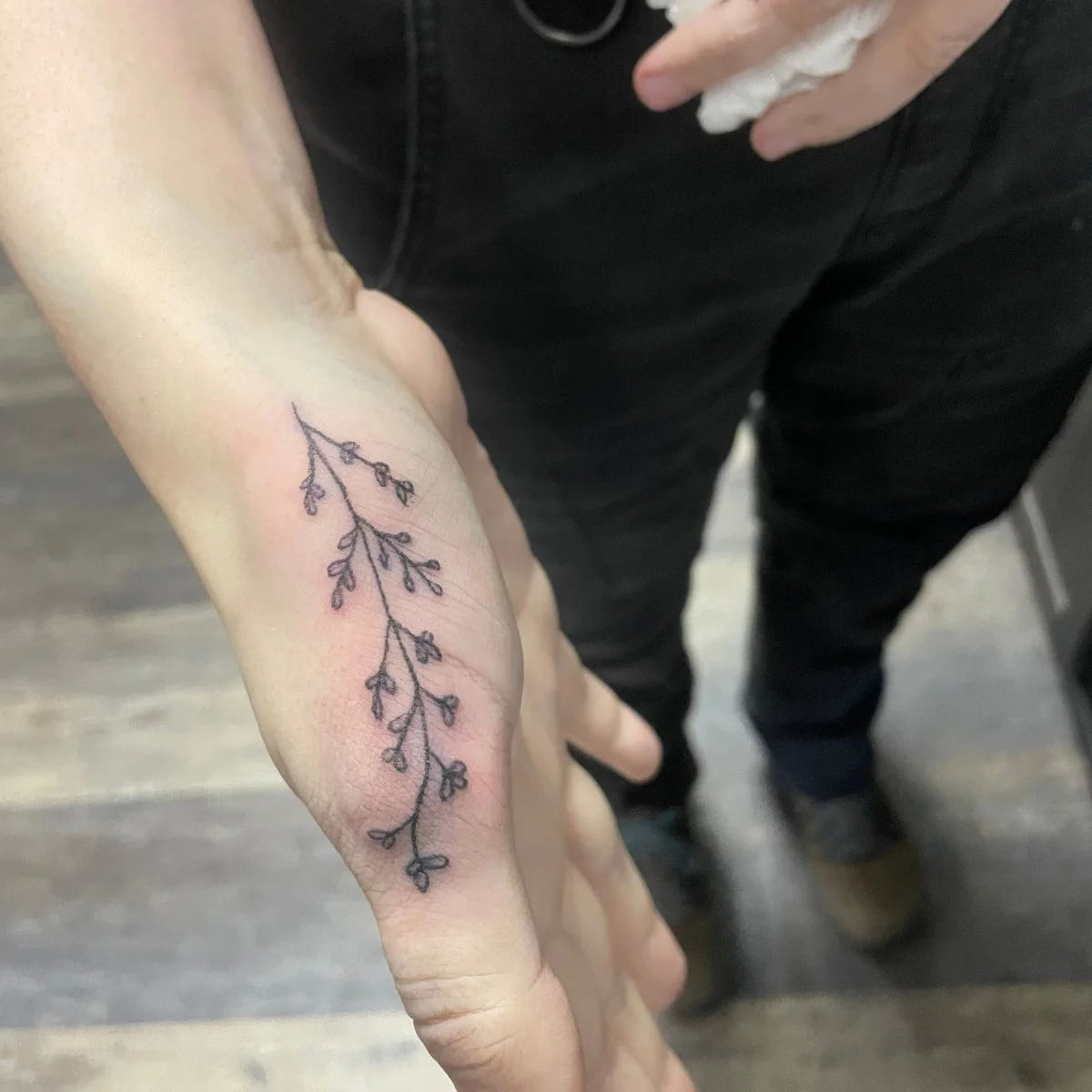
A great tattoo isn't a flat sticker; it moves with your muscles. Matching the flower shape to anatomy makes the piece feel natural:
Small/Dainty Accents: Best placed on static canvases (wrist, collarbone, behind the ear) where skin stretching is minimal. Many clients choose pre-designed flash tattoos for these quick, iconic accents.
Large Sweeping Compositions: High-movement areas (ribcage, full sleeve, outer thigh) require flowing stems and overlapping petals that complement your natural posture.
Studio Care & Tattoo Longevity
Proper heal-time protocols directly impact how bright your colors remain over the years:
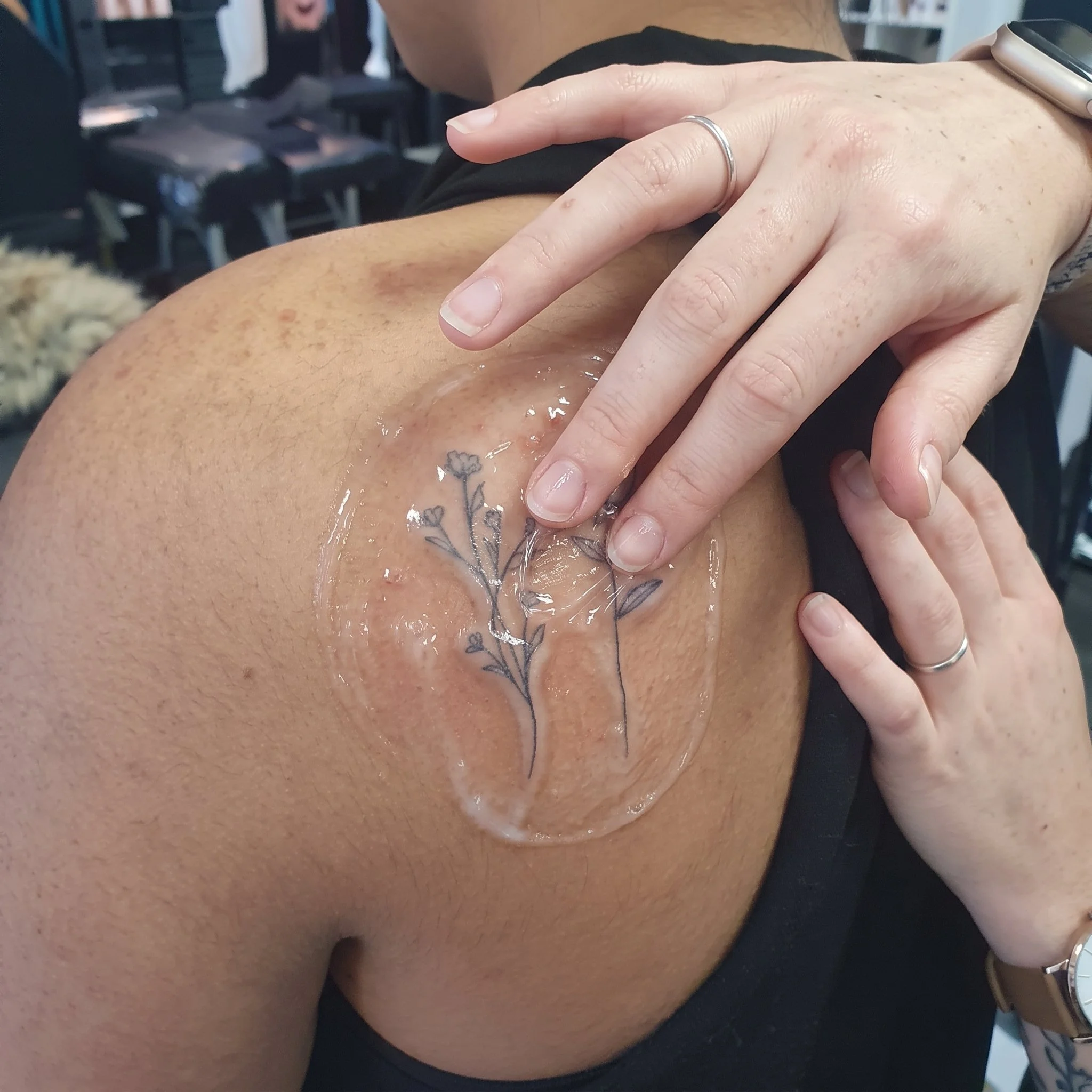
The Initial Heal (Days 1–14): Clean twice daily with fragrance-free antibacterial soap. Follow clinical guidelines from medical authorities like the Mayo Clinic Tattoo Care Guide, apply a thin layer of specialized tattoo balm, as over-moisturizing can trap heat and smother the skin.
Long-Term Pigment Protection: UV radiation breaks down tattoo pigments faster than any other factor. Broad-spectrum SPF 30+ sunscreen is essential for preventing ink fading and maintaining sharp outline contrast.
Floral & Symbolism Matchmaker
Build a cohesive botanical tattoo brief grounded in historical floriography and custom composition theory.
Conclusion
Whether you are drawn to the quiet resilience of a single-needle lavender stem, the bold tradition of a Japanese peony, or the personal narrative embedded in custom tattoos, flower tattoos remain one of body art's most enduring choices. A great botanical tattoo balances personal meaning with sound anatomical design—ensuring that every petal, line, and shadow complements your body's natural movement and ages with grace.
When you are ready to transition your ideas into ink, sitting down for a professional consultation with the best tattoo shops in Columbus, Ohio, is the most important step. A skilled artist will help you navigate line weight, pigment longevity, and placement so that your finished piece is as structurally sound as it is visually captivating.

Frequently Asked Questions
-
Not at all. Florals are a core element of classic American Traditional, traditional Japanese Irezumi, and dark illustrative tattooing. When paired with heavy contrast, dark shading, or animal motifs, floral pieces carry a strong, versatile aesthetic for anyone.
-
Black and grey illustrative florals with defined structural lines hold up best over decades. Delicate watercolor or borderless pastel designs will require more diligent sun protection and occasional touch-ups to stay vibrant.
-
Hydrate well for 48 hours prior, eat a full meal before heading to the studio, and exfoliate the area gently a day before your appointment. Avoid blood thinners and alcohol 24 hours prior to ensure clean ink saturation.